

Why Marin Trails Are Not Neutral Environments
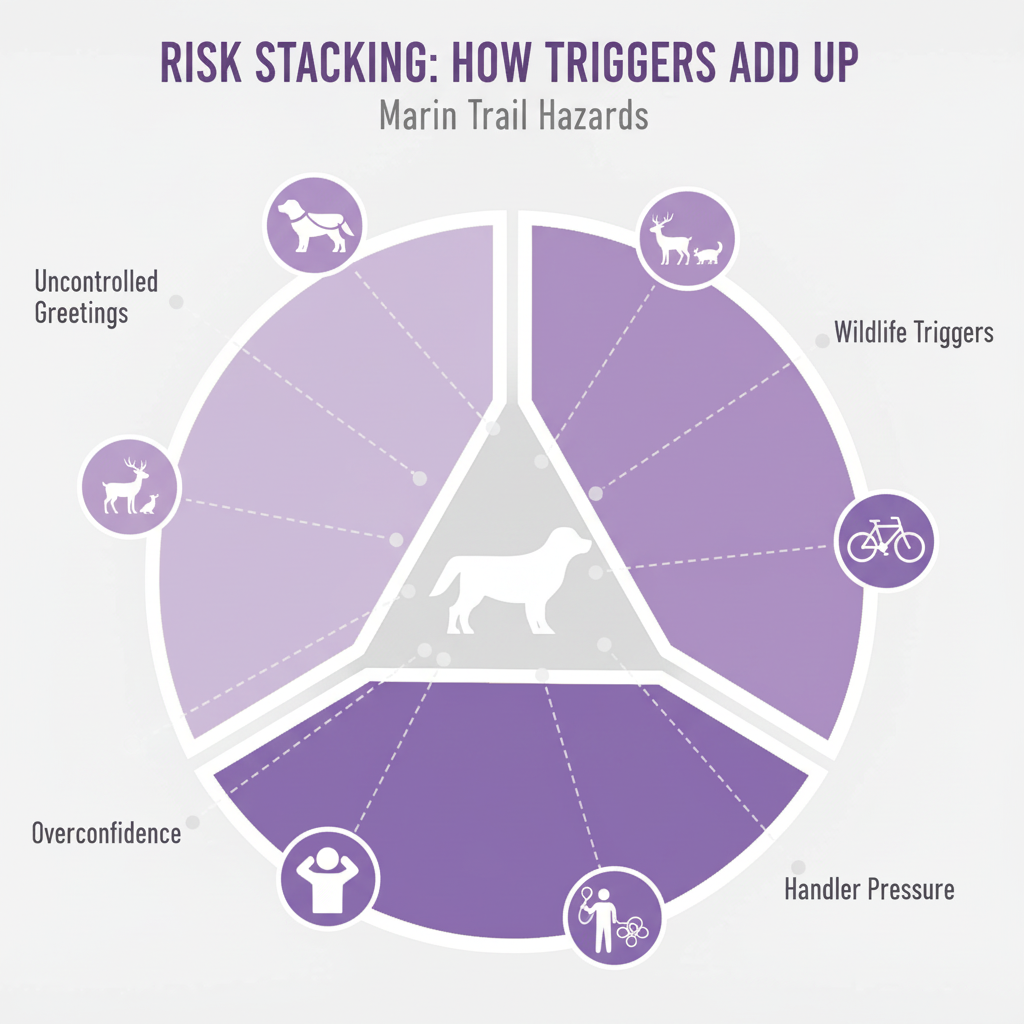
Marin County trails are shared, high-stimulus environments. Dogs encounter sudden visual pressure, fast-moving cyclists, wildlife, and narrow passing zones that remove a dog’s ability to create distance. These conditions increase stress even in dogs that appear well trained.
Hazard 1: Uncontrolled Dog-to-Dog Greetings
Face-to-face greetings on narrow trails eliminate escape routes. Dogs that feel trapped may escalate defensively, even if they are typically social. Repeated exposure without management increases the likelihood of future reactivity.
Hazard 2: Wildlife & Prey Triggers
Deer, coyotes, and small animals activate genetic prey drive. Once arousal spikes, obedience cues often fail. This is a genetics issue, not a training failure.
Hazard 3: Cyclists & Sudden Motion
Fast movement from behind triggers startle responses. Dogs with poor impulse control may lunge reflexively, creating safety and liability concerns.
Hazard 4: Overconfidence From “Past Success”
Many incidents occur because “nothing has happened before.” Risk accumulates silently until conditions align.
Hazard 5: Handler Decision-Making Under Pressure
Leash tension, emotional responses, and delayed decisions often escalate situations unintentionally.
How the Risk Matrix Prevents Trail Incidents
This blog introduces Module III: The Risk Matrix, which teaches owners to assess distance, trigger stacking, and exit options before problems occur. Owners struggling with trail walks are encouraged to revisit structured support through the dog-training-near-me service page.