
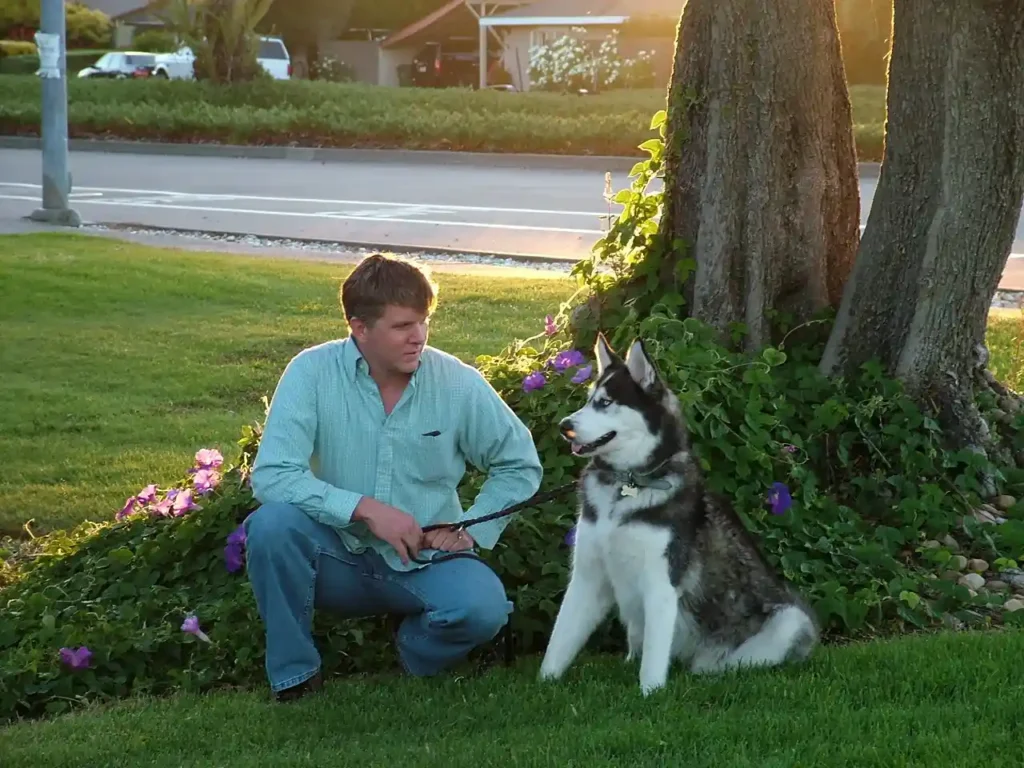
Manage Environment

Most owners try to train the dog first and the environment second. Bay K9 does the opposite. If a dog is set up in a space full of unpredictable noise, foot traffic, or visual triggers, no amount of repetition will produce reliable behavior — the environment is actively working against the training.

Manage Environment

Most owners try to train the dog first and the environment second. Bay K9 does the opposite. If a dog is set up in a space full of unpredictable noise, foot traffic, or visual triggers, no amount of repetition will produce reliable behavior — the environment is actively working against the training. Managing the environment isn’t about avoidance forever; it’s about controlling the variables while a dog builds the skills to handle them.

What Environmental Management Actually Means

This isn’t about wrapping your dog in bubble wrap. It’s about being intentional: closing blinds during high-traffic street hours if your dog reacts to passersby, choosing quieter walk times while building leash skills, or separating a dog from a chaotic entryway during greetings until they’ve learned a calmer default. Each small adjustment removes one more variable competing for your dog’s attention, which makes the actual training stick faster.

Sound, Light, and People — The Three Big Variables

  • Sound: Doorbells, traffic, other dogs barking nearby. Managing sound exposure — not eliminating it, but controlling timing and intensity — prevents a dog from rehearsing a stress response over and over.
  • Light and space: Bright, open, unfamiliar spaces can be just as overstimulating as loud ones. We help owners recognize when a dog needs a lower-stimulation “home base” during training.
  • People: Crowds, strangers, and even well-meaning guests can overwhelm a dog mid-lesson. Structuring who’s present, and when, is one of the fastest ways to speed up progress.

Why This Matters for Long-Term Success

A dog trained only in a controlled environment often falls apart the moment life gets unpredictable. Bay K9’s approach layers environmental management with gradual real-world exposure, so your dog learns to generalize good behavior — not just perform it in one familiar room. This is a core part of our in-home and on-site training, because your dog’s actual environment is the best training ground there is.

Contact Us

Frequently Asked Questions

No. It’s a temporary tool used while your dog builds real skills, not a permanent avoidance strategy.
Only after the behavior has been practiced across varied, gradually more distracting environments — a command learned in one quiet room doesn’t automatically transfer elsewhere.
Reducing visual triggers, like closing blinds during high foot-traffic hours, is often the quickest, lowest-effort change with a noticeable impact.