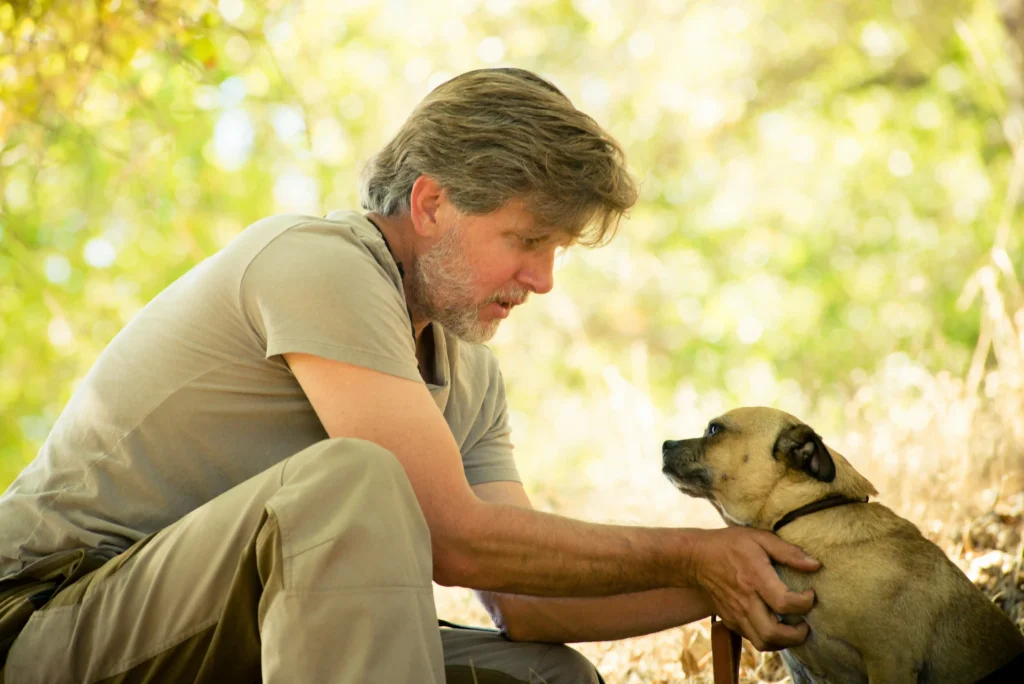
One of the most common mistakes in dog training isn’t a bad technique — it’s reacting before understanding what’s actually happening. A dog that lunges, freezes, or ignores a cue is communicating something, and that something is usually visible in the moment right before the behavior, if you know what to watch for. Bay K9 trains owners to pause and observe first, because the right response depends entirely on what’s actually driving the behavior.
What We’re Watching For
Before any correction or redirection, we assess three things: the dog’s body language (tension, ear position, tail carriage, weight distribution), the environment (what changed in the last few seconds), and the pattern (has this happened before, and under what conditions). This assessment usually takes only a few seconds, but it changes everything about how we respond.
Why This Prevents Bigger Problems Later
Dogs escalate when their early signals get ignored. A dog that gives a subtle stress signal — a lip lick, a turned head, stiffened posture — and gets no response from their owner will often escalate to a bigger, harder-to-miss signal next time, like a growl or a snap. Teaching owners to catch the early, quiet signals means fewer escalations, safer households, and faster progress in training overall.
A Skill You Can Build
Observation is trainable. In every session, Bay K9 walks owners through what we’re seeing in real time — not just what to do, but why, so you leave each session better at reading your own dog. This assessment skill carries directly into our behavior training programs and is often the first thing we teach during a free consultation, because it’s the foundation everything else builds on.