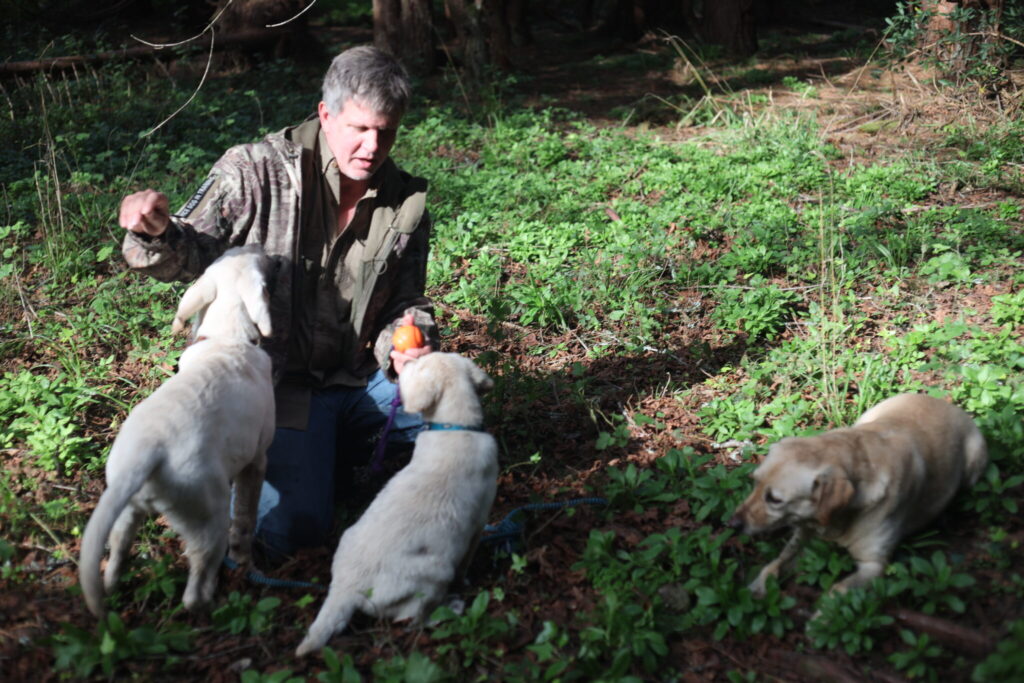
Long before a dog understands verbal commands, they’re reading your movement — the direction you step, the pace you set, where your weight shifts. Movement changes pressure in ways most owners never realize they’re creating. Stepping toward a dog applies pressure; stepping back releases it. Bay K9 teaches owners to use this consciously, because intentional movement can guide a dog’s behavior more effectively — and more gently — than repeated verbal corrections.
Pressure and Release, Explained
Every dog responds to spatial pressure on some level. Walking directly at a dog, squaring your shoulders toward them, or moving quickly into their space all increase pressure and often trigger avoidance, excitement, or anxiety depending on the dog. Turning your body slightly away, slowing your pace, or stepping back releases that pressure and can calm a dog down without a single word. Learning to read and use this is a core, often-overlooked training skill.
Where This Shows Up in Everyday Training
Leash walking: Direction changes and pace control guide a dog’s focus far more effectively than constant leash correction.
Greetings: How you position your body when meeting a dog — yours or someone else’s — sets the tone for the whole interaction.
Recall: Backing away while calling a dog is often far more effective than standing still and repeating the cue.
De-escalation: Calm, deliberate movement away from a trigger can defuse a building reaction before it peaks.
A Skill Worth Practicing
This is one of the more nuanced pieces of the Bay K9 method, and it’s something we coach hands-on during in-person sessions rather than something that translates well to written instructions alone. It’s a core focus in our outdoor adventures and leash-skills programs — book a free consultation and we’ll show you exactly how your own movement is already shaping your dog’s behavior, for better or worse.