

When a dog growls, lunges, barks, or reacts intensely, the word aggression is often used immediately. While true aggression does exist, many dogs labeled as aggressive are actually expressing genetic drive that has been misunderstood, mismanaged, or placed under excessive pressure.
Confusing aggression with genetic drive is one of the most common—and costly—mistakes dog owners make. It leads to inappropriate training choices, increased risk, and long-term behavioral fallout that could have been avoided with proper evaluation.
At Bay K9, distinguishing between aggression and genetic drive is a foundational step in responsible behavior management and public safety planning.
Why This Distinction Matters More Than Most Owners Realize
Mislabeling a dog as aggressive changes everything about how the dog is handled. It affects the training methods chosen, the emotional responses of the owner, and even how risk is perceived in public spaces.
When genetic drive is treated as aggression, dogs are often corrected or suppressed for instinctive behavior. This removes communication signals without reducing internal pressure, increasing the likelihood of sudden escalation later. Understanding the source of behavior allows owners to manage situations ethically, predictably, and safely.
For dogs already showing concerning behavior, this distinction often becomes clear during professional dog aggression help evaluations.
What Genetic Drive Actually Is
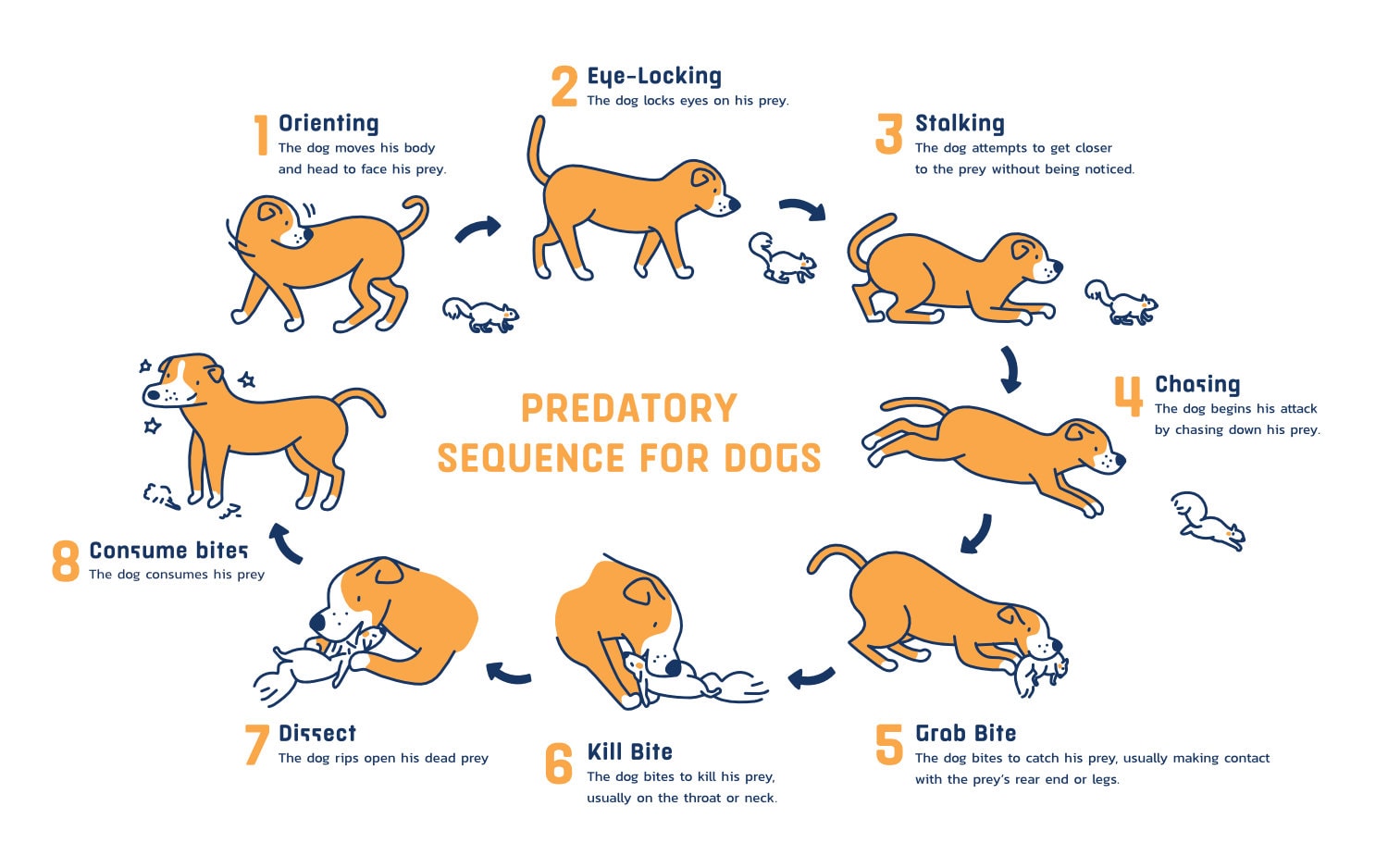
Genetic drive refers to inherited behavioral tendencies intentionally bred into dogs for specific tasks. These behaviors are not learned and do not require reinforcement to appear—they emerge naturally as the dog matures.

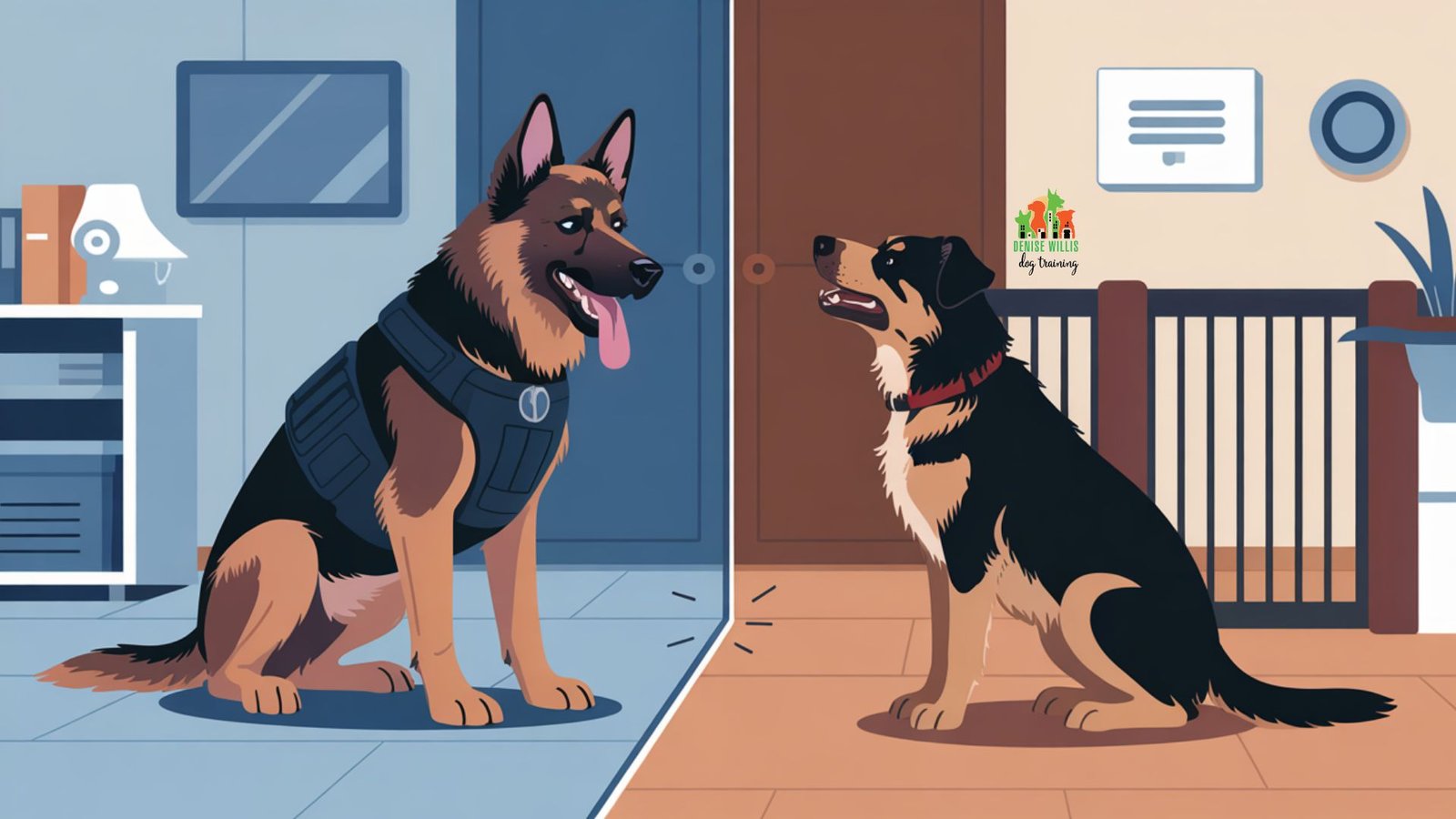
4
Common genetic drives include:
- Prey drive (chasing, gripping, fixating)
- Herding behavior (circling, blocking, nipping)
- Guarding instincts (territorial awareness, alerting)
- Defense drive (standing ground, forward pressure)
- Environmental sensitivity (reaction to motion or sound)
Breed history plays a major role here. Organizations like the American Kennel Club provide detailed breed purpose histories that explain why certain behaviors appear predictable in specific dogs
→ https://www.akc.org/dog-breeds/
What True Aggression Looks Like
Aggression is not instinctive task behavior. It is a response rooted in emotional state, most often driven by fear, anxiety, trauma, or prolonged stress.
Aggressive behavior is typically about self-preservation, not fulfillment of a genetic role. It often develops over time when a dog feels unsafe, overwhelmed, or unable to escape pressure.
The American Veterinary Society of Animal Behavior (AVSAB) explains how fear and stress drive aggressive responses in dogs
→ https://avsab.org/resources/position-statements/
Aggression vs Genetic Drive: Side-by-Side Comparison
| Factor | Genetic Drive | True Aggression |
|---|---|---|
| Origin | Inherited instinct | Emotional response |
| Predictability | Highly predictable | Context-dependent |
| Primary Trigger | Movement, task pressure | Threat perception |
| Emotional State | Focused, aroused | Fearful, defensive |
| Response to Punishment | Escalates conflict | Suppresses warning signs |
| Best Management | Structure and outlets | Safety and stabilization |
Understanding which column your dog fits into determines whether the solution involves channeling drive or reducing emotional risk.
Why Genetic Drive Is Often Misdiagnosed as Aggression
Drive-based behavior often looks intense:
- Strong eye contact
- Forward movement
- Vocalization
- Fixation on stimuli
- Difficulty disengaging
In modern environments—especially on leash—these behaviors are easily misread as intent to harm. In reality, they are often instinctive responses placed under restriction.
This misdiagnosis frequently leads owners to suppress behavior rather than manage it, creating real aggression where none existed before.
How Environment Amplifies Genetic Drive
Urban and suburban environments unintentionally magnify drive:
- Tight sidewalks
- Leash restriction
- Constant visual motion
- Lack of decompression space
A dog bred to respond to movement will struggle in high-stimulus environments like Marin County trails and neighborhoods. This is why environmental management is emphasized in data-driven K9 management approaches
→ https://bayk9.com/data-driven-k9-management
How Suppression Turns Drive Into Aggression
When dogs are punished for expressing drive:
- Warning signals disappear
- Stress accumulates internally
- Emotional regulation deteriorates
- Sudden reactions become more likely
Many serious incidents occur after long periods of “successful” suppression-based training. This is why behavior must be understood before it is corrected.
Where the Genetic Blueprint Fits In
At Bay K9, this distinction falls under Module I: The Genetic Blueprint. This module evaluates:
- What the dog was bred to do
- How the dog processes pressure
- Which environments increase arousal
- What management strategies fit the dog’s biology
This understanding informs every other step, including handler behavior, risk analysis, and safety planning. It often pairs with risk matrix incident analysis
→ https://bayk9.com/risk-matrix-incident-analysis
Why Obedience Alone Fails Both Drive and Aggression
Obedience assumes cognitive access. Under high arousal or fear, the thinking brain disengages and instinctive responses take over. This is why dogs may “know” commands but cannot perform them when pressure rises.
Management must come before obedience. This principle is explained further in dog training near me resources that focus on real-world behavior
→ https://bayk9.com/dog-training-near-me
Legal and Safety Implications of Mislabeling
Calling a drive-based dog aggressive can increase legal exposure by encouraging excessive restraint and reactive handling. Conversely, ignoring true aggression by dismissing it as “just drive” can put people and dogs at risk.
Accurate identification protects:
- The dog
- The owner
- The community
- The owner’s legal standing
This is why professional evaluation is essential when behavior intensity increases.
When Professional Assessment Is Necessary
You should seek professional behavior assessment if:
- Behavior escalates despite training
- Intensity increases under correction
- Warning signals feel inconsistent
- Public safety is a concern
- Legal consequences are possible
Many owners find clarity through structured behavior and handler assessments when uncertainty persists.
Understanding the Difference Changes Outcomes
When owners understand whether behavior is aggression or genetic drive:
- Training becomes targeted
- Pressure decreases
- Safety improves
- Dogs become predictable
- Owners regain confidence
This clarity is the difference between constant crisis management and long-term stability.
Final Thought
Aggression and genetic drive are not the same, and treating them as such creates risk. Understanding the difference leads to safer, calmer, and more ethical outcomes for everyone involved.
If this article resonates, explore:
- Dog Aggression Help
- Risk Matrix Incident Analysis
- Data-Driven K9 Management
Your dog’s behavior isn’t random.
It’s either instinct, emotion—or both.
The right framework shows you which.