

Trauma in dogs does not resolve on its own. Time alone does not heal trauma, and obedience does not erase it. When a dog has experienced fear, overwhelm, injury, or repeated stress, the nervous system changes how it processes the world.
At Bay K9, trauma is addressed through a structured, ethical, and safety-focused process known as the Trauma Action Management Plan. This guide explains how trauma affects dogs, why traditional training often fails, and how recovery becomes possible through stabilization, perspective, and management.
What Trauma Actually Is in Dogs
Trauma is not defined by a single event. It is defined by how the dog’s nervous system experienced that event.
Trauma can develop from:
- Bite incidents or near-misses
- Repeated forced exposure
- Chronic leash pressure
- Sudden medical procedures
- Being trapped or unable to escape
- Overwhelming social or environmental stress
Once trauma forms, the dog’s brain prioritizes survival over learning.
Why Trauma Changes Behavior So Dramatically
Traumatized dogs are not choosing their behavior. Their nervous systems are reacting automatically.
When trauma is active:
- The thinking brain disengages
- Reflexive responses dominate
- Startle thresholds drop
- Recovery time increases
- Predictability decreases
This is why traumatized dogs may appear “fine” one moment and explode the next.
The American Veterinary Society of Animal Behavior explains how fear and trauma alter emotional processing and defensive responses
→ https://avsab.org/resources/position-statements/
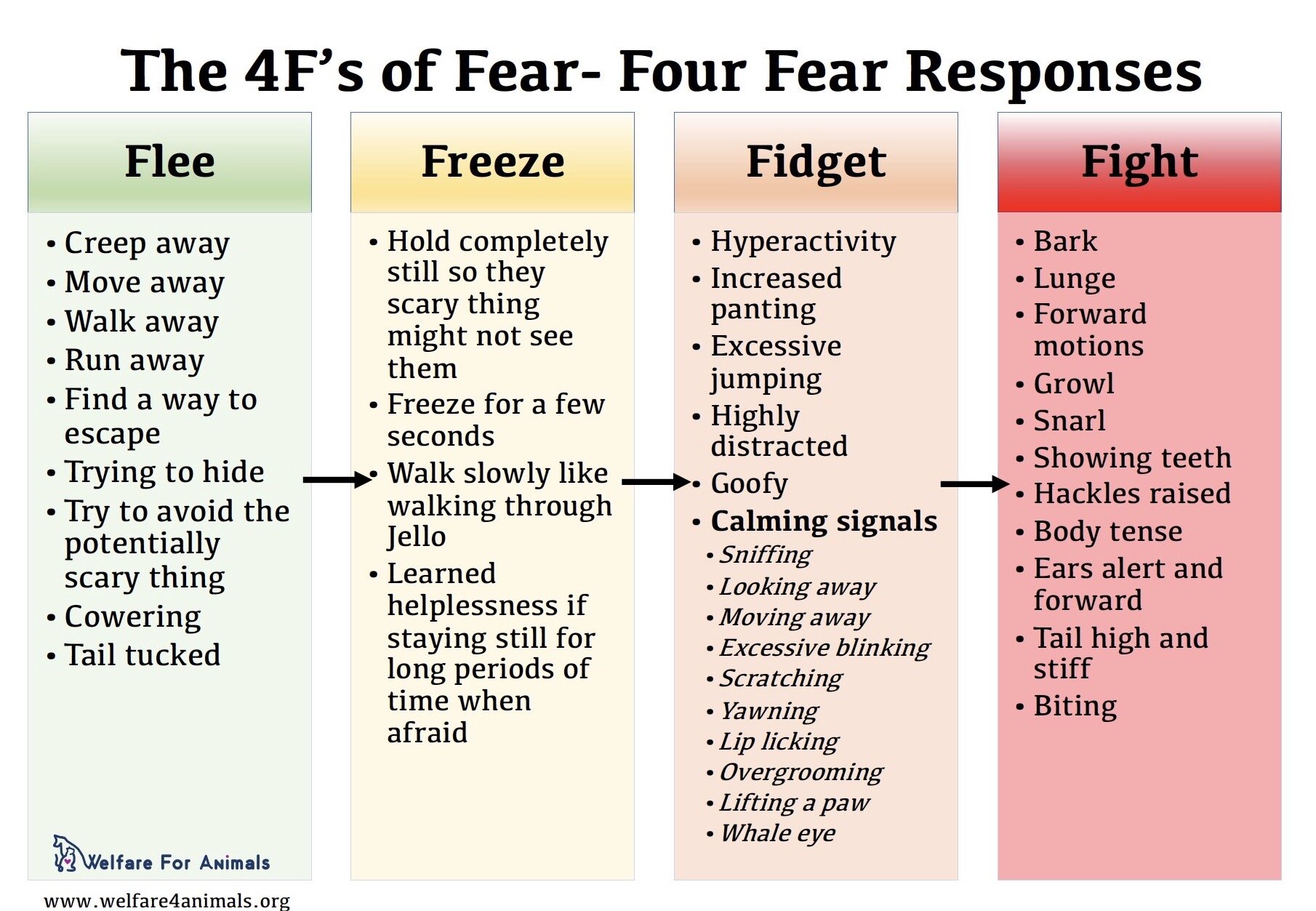
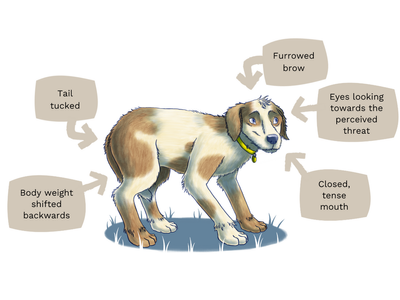
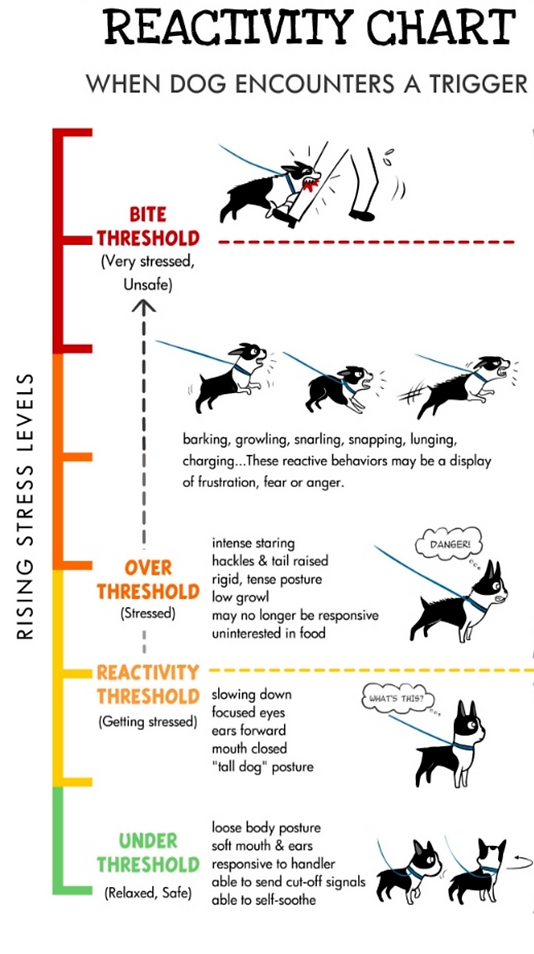
Visual Trauma Response Charts: What’s Happening Internally
4
These visuals help owners understand:
- Why reactions feel sudden
- Why suppression increases danger
- Why recovery must come before exposure
- Why pressure delays healing
Trauma management begins with stabilization, not training.
Why Traditional Training Fails Trauma Cases
Most training systems assume the dog can think, process, and learn. Trauma removes that ability under stress.
Traditional approaches fail because they:
- Push dogs beyond coping thresholds
- Confuse compliance with recovery
- Suppress warning signals
- Increase internal stress
- Create delayed fallout
This is why trauma cases often worsen after “intensive training” or boot-camp-style programs.
The Trauma Action Management Plan Explained
The Trauma Action Management Plan is a phased recovery system. Each phase must be completed before moving forward.
Phase One: Stabilization and Safety
Stabilization is non-negotiable.
This phase focuses on:
- Reducing exposure to known triggers
- Increasing distance and exit options
- Preventing rehearsal of reactions
- Establishing predictable routines
- Removing unnecessary pressure
This phase often overlaps with safety-oriented thinking
→ https://bayk9.com/safety-thinking-aggression
Progress is measured by reduced intensity and faster recovery—not obedience.
Phase Two: Perspective Rebuilding
Once safety is established, the next step is changing how the dog perceives the world.
Perspective rebuilding includes:
- Distance-based exposure
- Allowing the dog choice
- Ending sessions before overload
- Reinforcing disengagement
- Replacing fear expectations with neutrality
This phase aligns directly with perspective-based training
→ https://bayk9.com/perspective-training-fear
Phase Three: Controlled Reintroduction
Only after stabilization and perspective rebuilding should reintroduction occur.
This phase focuses on:
- Controlled environments
- One variable at a time
- Short, successful exposures
- Immediate exits when stress rises
- Long recovery periods
There is no rushing trauma recovery. Speed increases risk.
Genetics and Trauma Sensitivity
Not all dogs process trauma the same way.
Genetic factors influence:
- Sensitivity to stress
- Recovery speed
- Startle thresholds
- Environmental tolerance
Dogs with high sensitivity or drive require more conservative recovery plans. Understanding genetics early through the genetic blueprint prevents re-traumatization
→ https://bayk9.com/puppy-genetic-blueprint
The Handler’s Role in Trauma Recovery
Handlers play a decisive role in whether trauma resolves or deepens.
Effective trauma-aware handlers:
- Stay emotionally neutral
- Avoid reassurance under panic
- End exposure early
- Respect avoidance signals
- Prioritize safety over progress
This aligns with Module II: The Handler’s Profile, where owner behavior is treated as a primary variable
→ https://bayk9.com/puppy-handler-profile-tips
Trauma, Risk, and Public Safety
Traumatized dogs can become unpredictable under pressure. This makes trauma management a public safety responsibility, not just a personal concern.
Risk increases when:
- Warning signals are suppressed
- Dogs are pushed into crowded spaces
- Distance is removed
- Exit routes are blocked
This is why trauma cases often intersect with risk matrix incident analysis
→ https://bayk9.com/risk-matrix-incident-analysis
Signs Trauma Is Still Active
Watch for:
- Freezing or sudden shutdown
- Hyper-vigilance or scanning
- Delayed reactions
- Explosive responses after restraint
- Long recovery times
These signs indicate the nervous system is still in survival mode.
What Real Progress Looks Like in Trauma Recovery
Progress is not linear and not measured by obedience.
Healthy indicators include:
- Shorter recovery time
- Reduced reaction intensity
- Increased curiosity
- Willing disengagement
- Calm observation at safe distances
These changes signal nervous system healing—not compliance.
Final Thought
Trauma recovery is not about forcing confidence.
It is about restoring safety from the inside out.
When trauma is managed correctly, behavior stabilizes naturally, trust rebuilds, and long-term safety becomes possible.
Explore related resources:
- Perspective-Based Training
- Safety-Oriented Thinking
- Risk Matrix Incident Analysis
- Data-Driven K9 Management
Trauma is not a failure.
It is a signal that safety must come first.